 //
EST. 2020 · KATOWICE · PL
//
EST. 2020 · KATOWICE · PL
//
EST. 2020 · KATOWICE · PL
//
EST. 2020 · KATOWICE · PL
BASZTA is a multi-mast acoustic sensor network for detection, classification and three-dimensional localisation of unmanned aerial vehicles. The system emits no electromagnetic signature, remains operational under jamming and active electronic warfare, and reliably engages autonomous and RF-silent targets that are invisible to spectrum-based systems.
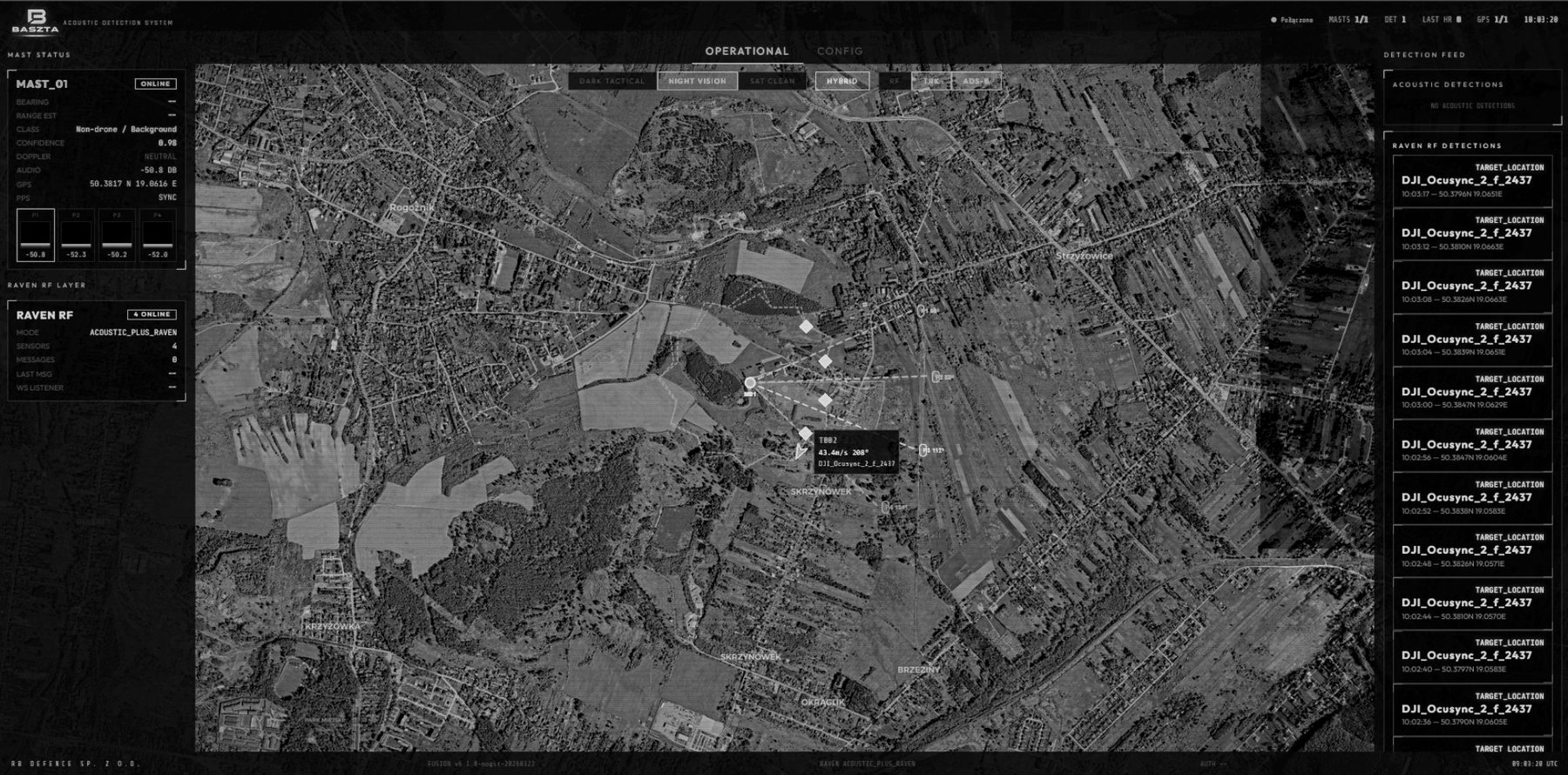
Inertial and visually-guided UAVs do not transmit. Loitering munitions cross hundreds of kilometres on internal-combustion engines, hugging terrain, navigating without GNSS. Saturation electronic warfare denies radar and disables RF detection. The classes of threat that matter most are increasingly the ones a spectrum-based sensor cannot see.
At the same time, FPV-class platforms costing a fraction of conventional munitions have demonstrated lethal effect against armour, command nodes and personnel.
BASZTA detects the acoustic signatures that propulsion always produces — rotor blades, combustion engines, electric motor whine. Three or more masts triangulate position from time-of-arrival differences. The system is fully passive: no emissions, no electromagnetic footprint, no cooperation with the target required.
Resilient against GPS jamming, RF denial and active ECM. Effective against autonomous platforms. Inexpensive to operate. Continuously vigilant, 24/7.
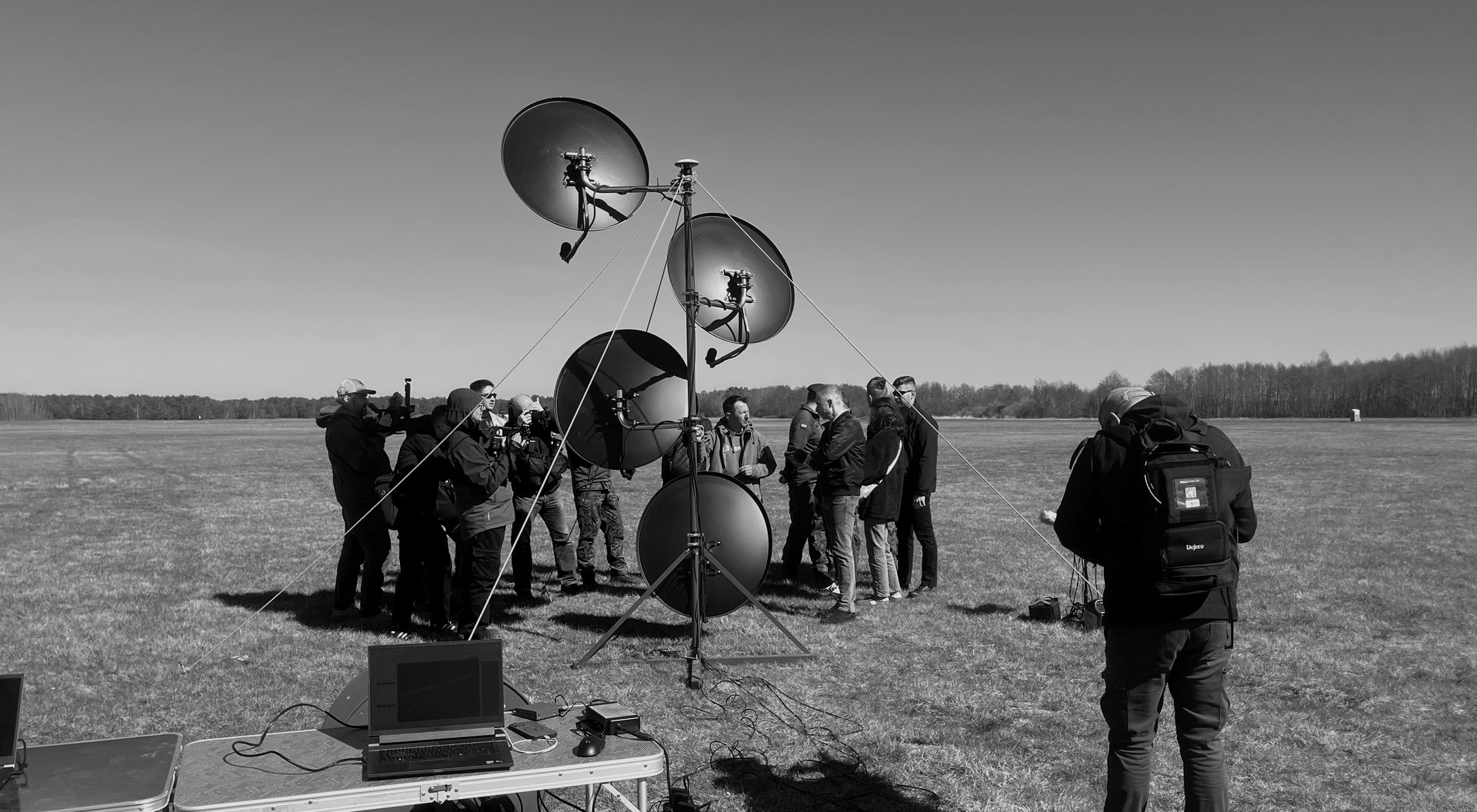
Directional parabolic microphones on each mast capture the acoustic signature of UAV propulsion across the full audible band.
GPU-accelerated neural network at the edge classifies threat type with confidence above 90 percent. Per-class libraries continuously expanded.
Time-of-arrival fusion across three or more masts yields three-dimensional position. GPS / PPS / NTP time discipline.
Position, bearing, classification and confidence published to the C2 layer over SAPIENT or as a CoT event into the TAK ecosystem.
| Feature | BASZTA | Radar | RF | Optics |
|---|---|---|---|---|
| Passive operation | YES | NO | NO | YES |
| ECM resistance | YES | PARTIAL | NO | YES |
| Autonomous / RF-silent UAVs | YES | YES | NO | YES |
| Night / poor weather | PARTIAL | YES | YES | NO |
| Operating cost | LOW | HIGH | MEDIUM | MEDIUM |
// BASZTA is designed to complement, not replace, existing radar, RF and optical sensors. In a layered C-UAS architecture it covers the gap left by spectrum-based systems and remains effective under the conditions in which they fail.
Sensing for Asset Protection with Integrated Electronic Networked Technology — developed by the UK Ministry of Defence and the Defence Science and Technology Laboratory. Official UK C-UAS standard, NATO STANAG candidate, BSI Flex 335 published.
The Android Team Awareness Kit and its Windows counterpart are the de-facto tactical mapping standard across allied forces. BASZTA detections appear directly on the shared situational map with position, time and sensor metadata.
BASZTA can be integrated with TDL infrastructure through a certified external JREAP-C gateway. The system provides tracks of detected objects in a standardised intermediate format; the gateway handles translation to the appropriate Link 16 and J-series messages, and JREAP-C transmission over the IP network.
// BASZTA is designed for layered, multi-sensor architectures. The system is integrated with, and remains open to integration alongside, third-party RF detection, primary and passive radar, electro-optical and infrared trackers, and electronic-warfare suites — delivering a complementary acoustic layer that fills the gaps spectrum-based and line-of-sight sensors leave open. Integration is delivered through SAPIENT, ATAK / CoT, or directly with partner C2 stacks.
Power generation, water utilities, data centres, telecommunications nodes.
Operating bases, depots, command posts, deployed forces in the field.
Civil and military airports, heliports, approach corridors, runway protection.
Stadiums, concerts, summits, VIP movements and protected venues.
Manufacturing plants, refineries, chemical sites, large-area warehousing.
Hospitals, government offices, embassies and consular premises.
Performance figures and integration details published here are indicative. Detailed datasheets, integration kits, deployment plans and pricing are released only to identified end-users and integrators after written request, vetting, and applicable end-use undertakings under Polish and EU export-control law.
Request brief →